When the World Begins to Speak
©TEA Press
Sometimes an ordinary walk can make you notice something you would otherwise have passed by.
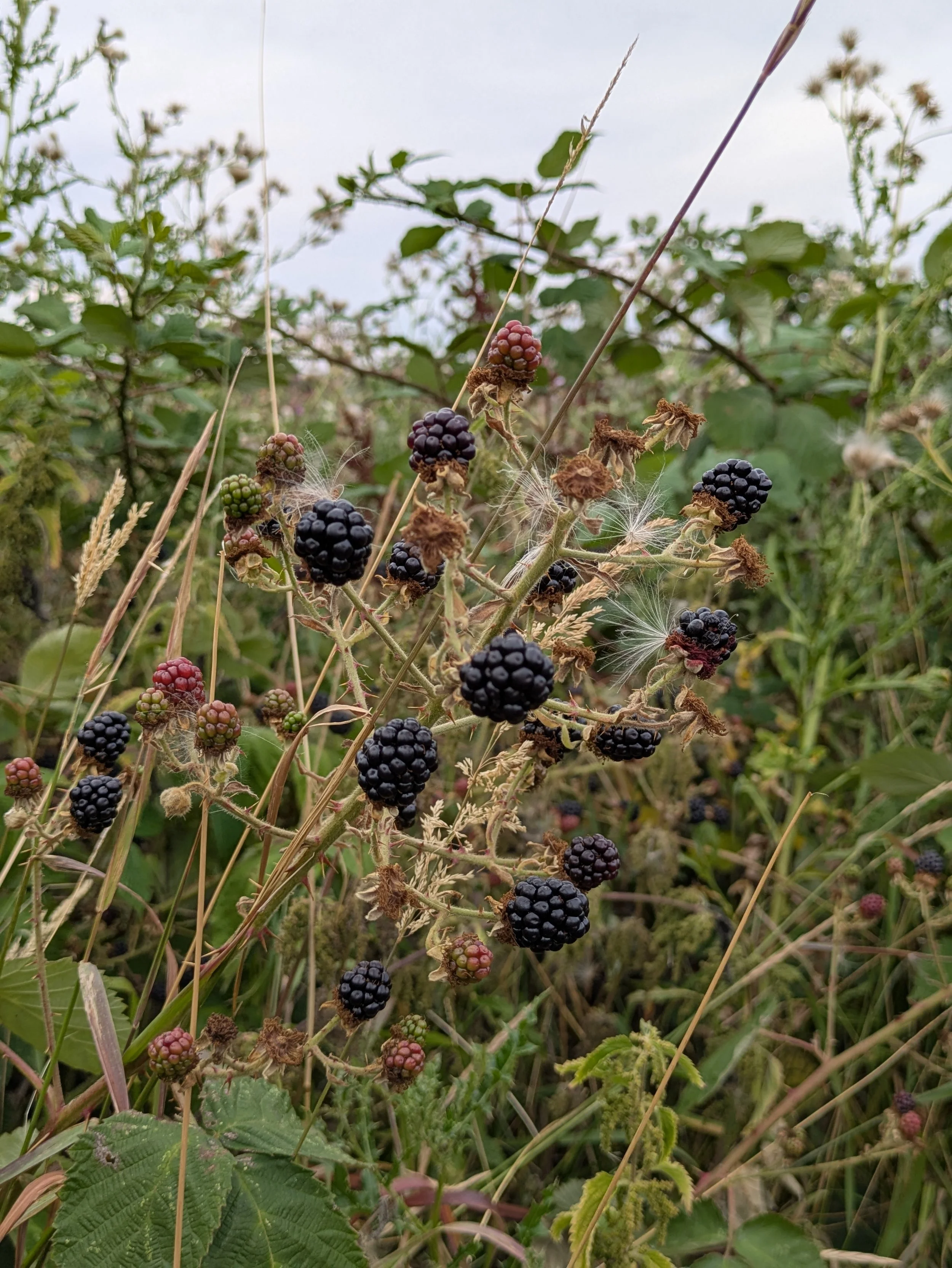
Recently, I was walking home from a busy town centre when I noticed three people picking wild blackberries.
It was a small scene. Nothing particularly remarkable.
And yet I found myself stopping to think about it.
What We Have Learned to Call Ours
Blackberries are everywhere at this time of year. Growing along hedgerows, paths and patches of uncultivated ground, they appear without anyone planting, tending or packaging them.
Yet we are also accustomed to encountering them in quite a different form.
Cleaned, packaged and labelled.
Transported to shops.
Placed on shelves.
Priced and sold.
The same fruit can be experienced either as something freely available in the landscape or as something that has become a commodity.
Neither observation is necessarily a criticism of commerce. We need systems of production, distribution and exchange. But I began to wonder what happens when we become so accustomed to receiving things through those systems that we forget to notice where they came from in the first place.
What Is Already Being Offered?
The people I saw picking blackberries were doing something very simple.
They were noticing what was there.
They didn't need to manufacture the fruit.
They didn't need to make it appear.
They simply had to recognise it, reach for it and gather it.
There was something strangely beautiful about that.
It made me wonder whether we sometimes spend so much time looking for what we need that we fail to notice what is already being offered.
Perhaps provision doesn't always arrive in the form we have learned to expect.
Perhaps sometimes it is growing beside the path.
Learning to Notice the Season
This has made me more attentive to the seasonal landscape around me.
The natural world doesn't operate according to the schedules we create for it. It has its own rhythms, cycles and timings. And those rhythms are changing.
The seasons are becoming less predictable. Things flower earlier or later. Growth and harvest can shift. The familiar landscape is not quite as fixed as we might imagine.
That makes paying attention increasingly important.
We cannot simply rely on what we remember the landscape being like.
We have to learn to notice what is actually happening now.
And perhaps this is true of our inner landscapes too.
Meeting the World Halfway
I've been thinking about what it might mean to meet the world halfway.
Not imposing our expectations upon it.
Not withdrawing from it in search of something beyond it.
But becoming sufficiently present to notice what is actually there and allowing what we encounter to inform us.
This is part of what I mean when I talk about orientation.
We cannot find our bearings from an imagined landscape.
We have to begin with the landscape that is actually beneath our feet.
We need to notice the weather.
We need to recognise the terrain.
We need to pay attention to what is changing.
And sometimes we need to stop looking for an answer long enough to notice that something has already appeared.
When the World Begins to Speak
Perhaps this is one of the things that happens when we become more attentive.
The world begins to speak.
Not necessarily in dramatic or mystical ways.
Sometimes it speaks through a patch of blackberries.
Through the changing light.
Through something growing where we didn't expect it.
Through an encounter that catches our attention.
Through the sudden recognition that something we had been searching for has been quietly present all along.
The challenge is learning to distinguish genuine invitation from the stories we create around what we notice.
That requires discernment.
We don't have to turn every coincidence into a message.
But neither do we have to assume that everything is meaningless simply because it is ordinary.
Perhaps there is another way.
To notice.
To wonder.
To remain present long enough to see what, if anything, emerges.
Learning to See What Is Already Here
This is becoming increasingly important to the way I understand TEA Cosmology.
The work isn't simply about looking inward.
It is about learning to see where we are.
To notice the relationships, patterns, possibilities and conditions that make up the landscape we inhabit.
And perhaps, sometimes, to recognise that what we need to see is already there.
We simply haven't learned how to see it yet.
The landscape is always richer than any map can fully capture.
Perhaps the first step is not always to find a better map.
Perhaps it is to look again at the ground beneath our feet.
What might you notice if, for a moment, you stopped looking for what you think you need and paid attention to what is already being offered?
