THE LETTER
Field Notes on Weather
1st October 2026
The English have a curious relationship with the weather. We talk about it constantly. Perhaps because it gives us something safe to talk about when there are deeper things we would rather leave untouched. We say we are under a cloud, that something is brewing, that we need to clear the air, or that things are looking brighter. Songs have been doing much the same thing for generations. We sing about thunder in the heart, falling rain, winter giving way to spring, and the sun finally breaking through.
We seem to understand, intuitively, that weather can describe something happening within us. But perhaps we haven't become quite so good at reading our own weather.
I've been thinking about this since my experience of Fog last month. At the time, I was tempted to think of it as something that was preventing me from seeing clearly or knowing what came next. Now, as it begins to lift, I can see that it was doing something else. The Fog gave me a kind of protective blanket. It kept me from moving too quickly beyond something I needed to stay inside. It gave me space to withdraw from the noise around me and prompted me to go further inward, to encounter something I'm less familiar with.
What has been emerging isn't another answer to find. It's a deeper trust in what I have already gathered through experience, and the courage to begin speaking from it in my own voice. Perhaps this is one reason I am becoming increasingly drawn to Emotional Ecology. We tend to treat difficult emotional weather as something that has gone wrong. We want the rain to stop, the fog to lift, the storm to pass, and we try to get back to sunshine as quickly as possible. But what if the weather is doing something?
Perhaps rain can tell us something about what needs to be felt, released or allowed to move. A storm can draw our attention to something that can no longer remain undisturbed. Wind can create movement where things have become stagnant. Fog can temporarily limit our view, bringing our attention closer to what is immediately around us.
The point isn't to decide that every difficult condition is helpful, or to turn every storm into a lesson. Weather can become harmful. Not all of it is ours, and sometimes we contribute to our own weather, making things foggier in a more confusing way. Sometimes we need shelter, to change the conditions, to seek help, or simply to wait.
But perhaps before we try to change the weather, we could become a little more curious about what is happening. What is this condition asking me to notice? What has changed? What might need attention?
What if our emotional weather is more significant, and perhaps more helpful, than we have previously imagined or understood? What if becoming better at reading it could change our relationship with ourselves, rather than simply helping us get back to sunshine more quickly?
My exploration is leading me somewhere I didn't expect.
What might your weather be trying to do for you?
Until the skies clear,
Jayne
From the Mountains
PAST DESPATCHES
-
THE LETTER
Field Notes on Fog
1st September 2026
Over the past few months, my own inner landscape has felt remarkably foggy. The old stories and familiar maps I used to rely on to understand my direction have started to loosen their grip, leaving a soft, quiet disorientation in their place.
In the past, I would have panicked, straining my eyes to force a horizon through the mist, but through the practice of Emotional Ecology, I am learning to sit with Fog and to understand that I am not experiencing a personal failure of vision. Sometimes Fog is what happens when the landscape is changing, and an old map no longer gives us the clarity it once did.
I’m sharing this because I suspect I’m not the only one walking through Fog right now. You might be noticing a similar loosening of old narratives, a sense of existing between who you were and what is emerging. You might also be noticing storms beyond your own landscape, or feeling their effects much closer to home.
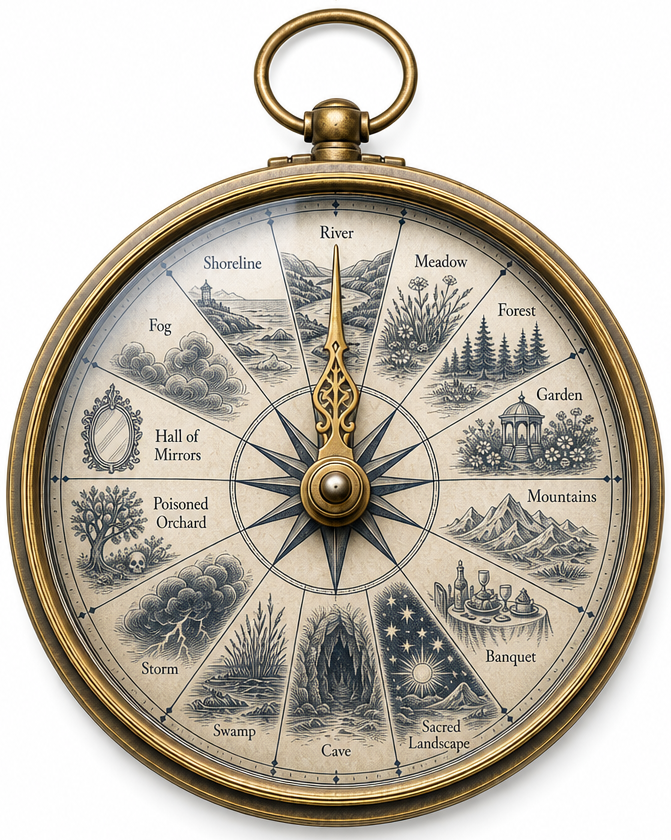
As I write the Emotional Ecology book, I am walking these terrains and experiencing their weather for myself. I've been mapping both the landscape and its meteorology. I don't stand outside the weather looking in. I am learning how to navigate the Fog, Swamp, and Storm.
Having a map doesn't make the weather disappear. But as I learn to recognise where I am and how to respond to what I'm experiencing, I'm finding that I can relax and walk with a little more grace and a lot less panic, one step at a time.
If your landscape feels obscured today, you don't have to force clarity. You can simply pause, feel the solid ground beneath you, and let the weather move at its own pace.
Thank you for sharing the trail with me.
Until the mist clears,
Jayne
From the Mountains