So What Does This Mean for How We Live?
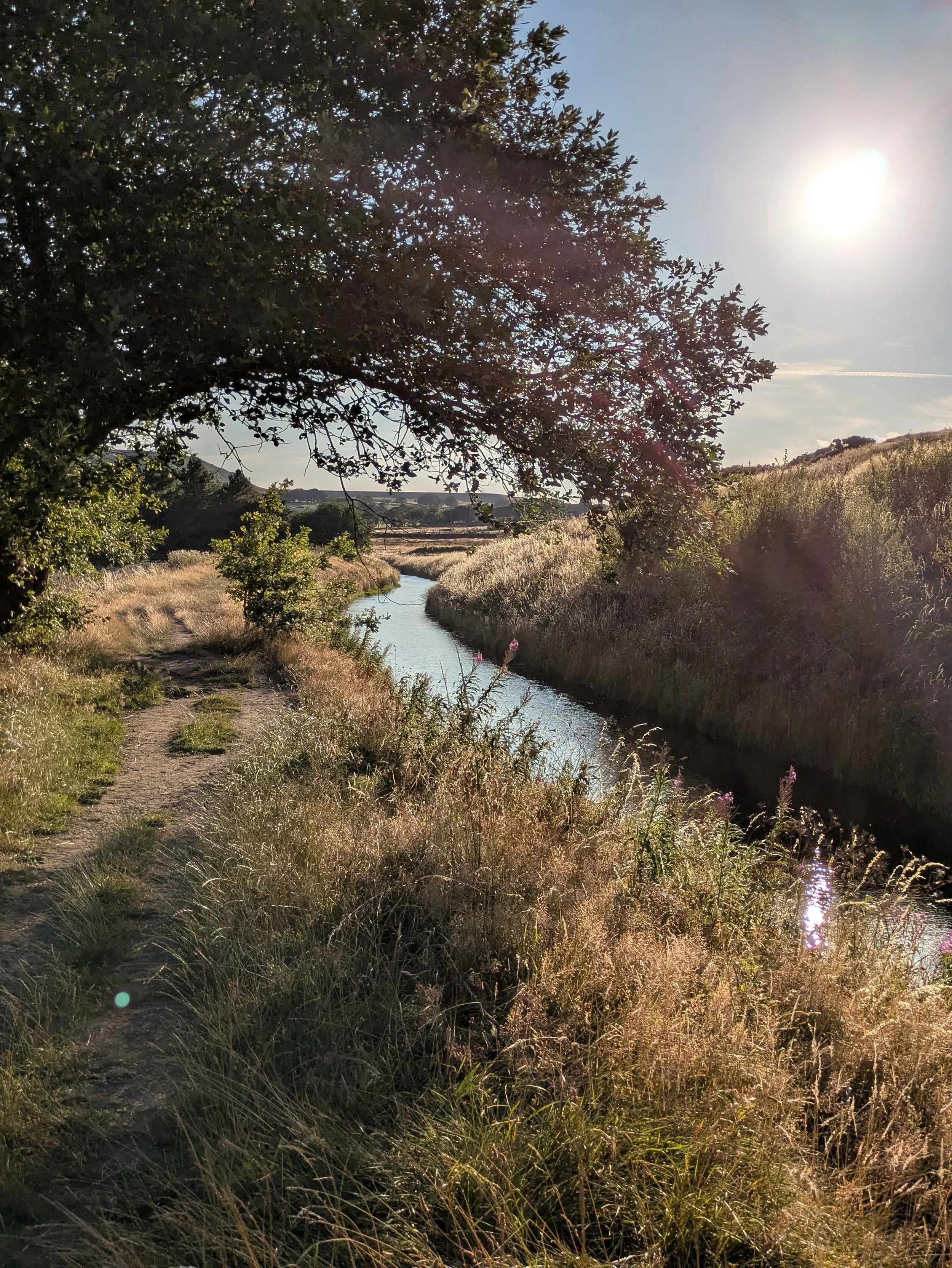
©TEA Press
Learning to see where we are changes more than the way we understand ourselves.
It can change the way we live.
If our inner lives have landscapes, and if those landscapes influence what we can see, feel, understand and do, then perhaps the first step towards change isn't always to change ourselves.
Perhaps it is to become better acquainted with where we are.
Before We Move, We Need to See
We are often encouraged to act.
Make a decision.
Change your habits.
Set a goal.
Move forward.
Sometimes that is exactly what is needed.
But there are times when movement without orientation simply takes us somewhere else without resolving the thing that made us feel lost in the first place.
TEA begins somewhere different.
Where are you?
How did you get here?
What is happening around you?
What kind of terrain are you inhabiting?
What is the emotional weather doing?
What can you see from where you are standing?
These aren't questions designed to keep us thinking instead of acting.
They are questions designed to help us see clearly enough to act well.
We Don't Have to Leave Every Difficult Terrain
One of the consequences of thinking in terms of landscapes is that a difficult place doesn't automatically become a place we have to escape.
There are times when movement is possible and necessary.
There are also times when staying is important.
Grief may need to be lived through rather than hurried away from.
Uncertainty may need to be tolerated while something becomes clearer.
A difficult truth may need to be faced rather than immediately transformed into something more comfortable.
And sometimes what initially feels like an impossible terrain becomes more navigable simply because we have stopped fighting the fact that we are there.
This doesn't mean accepting everything as it is.
It means learning to distinguish between being in a difficult place and being permanently trapped there.
The Landscape Is Not the Whole of Reality
When we are deeply immersed in an experience, it can be difficult to imagine anything beyond it.
Fear can make the world feel dangerous.
Grief can make the future feel absent.
Shame can make us feel as though our whole identity has been reduced to what we have done or what has happened to us.
Confusion can make every possible direction seem equally uncertain.
But the experience of being somewhere is not necessarily the same as knowing the whole landscape.
There may be more to see.
There may be another path.
There may be higher ground.
There may even be something present within the terrain that we have not yet learned to recognise.
Sometimes we haven't been able to see it for looking.
Seeing Changes What Becomes Possible
This is one of the reasons I have become so interested in mapping.
A map doesn't change the landscape.
It changes our relationship with it.
It can help us recognise where we are, distinguish one terrain from another and notice possibilities that were previously invisible.
The same can be true of our inner lives.
When we can name what we are experiencing, we can begin to relate to it differently.
When we understand the conditions around it, we can begin to recognise its patterns.
When we can distinguish the terrain from the emotional weather passing through it, we may stop assuming that what we feel today is the whole truth about our lives.
And when we begin to see possible movement, we regain something that can be difficult to find when we are lost: agency.
Movement Doesn't Always Mean Going Forward
We often talk about moving forward as though life has one correct direction.
But landscapes don't work like that.
Sometimes movement means going forward.
Sometimes it means stepping sideways.
Sometimes it means turning around.
Sometimes it means climbing.
Sometimes it means descending.
Sometimes it means stopping long enough to work out where you are.
And sometimes the most important movement is an internal one: seeing something differently, allowing something to become conscious, changing a relationship to what has happened, or recognising a possibility that wasn't visible before.
This is why TEA is interested in discernment rather than constant movement.
The question isn't:
How do I get out of here as quickly as possible?
It is: What movement, if any, is possible from here?
Living With Greater Orientation
Perhaps this is what it means to live with greater orientation.
Not to have everything worked out.
Not to avoid difficult terrain.
Not to remain permanently calm.
Not to know exactly where the path will lead.
But to become increasingly able to notice: where we are, what is happening, what matters, and what might be possible next.
That changes the nature of agency.
We don't have to control everything around us in order to participate meaningfully in our own lives.
We can learn to respond rather than simply react.
We can learn to wait when waiting is needed.
We can learn to move when movement becomes possible.
We can learn to recognise when we are following an old path simply because it is familiar.
And we can become more attentive to the things that quietly call us towards greater coherence, relationship and life.
Perhaps We Have Been Looking in the Wrong Places
There is something else emerging for me from this work.
Perhaps some of what we are searching for isn't somewhere else.
Perhaps it is already present within the landscape we inhabit.
But we haven't learned how to see it.
We may have spent years trying to become someone different, reach somewhere better, escape something difficult or find the answer outside ourselves.
Yet sometimes the first movement is much quieter.
Notice.
Become present.
Look again.
Learn to recognise what is already here.
Then begin to discern what it might be asking of you.
That is not passive.
It is a different kind of activity.
It is learning how to inhabit reality well enough to participate in what comes next.
Learning How to Walk the Landscape
This is where TEA Cosmology is beginning to take me.
The purpose of mapping the inner landscape isn't to produce a perfect map.
It is to help us become better at seeing, discerning and moving.
The landscape will always be richer than any map can fully capture.
There will always be things we haven't noticed yet.
There will always be weather we cannot control.
There will be places where we need to stay, places where we need to leave, and places we cannot yet see beyond.
But perhaps we don't need to know the whole journey in advance.
Perhaps we need to know enough to find our bearings.
Enough to take the next step.
Enough to recognise when something within the landscape is asking to be noticed.
And perhaps, over time, we learn not simply how to find our way through life, but how to walk the landscape well.
Where are you right now, and what might become possible from there?
