The Inner Geography
An Overview of the Terrains Within
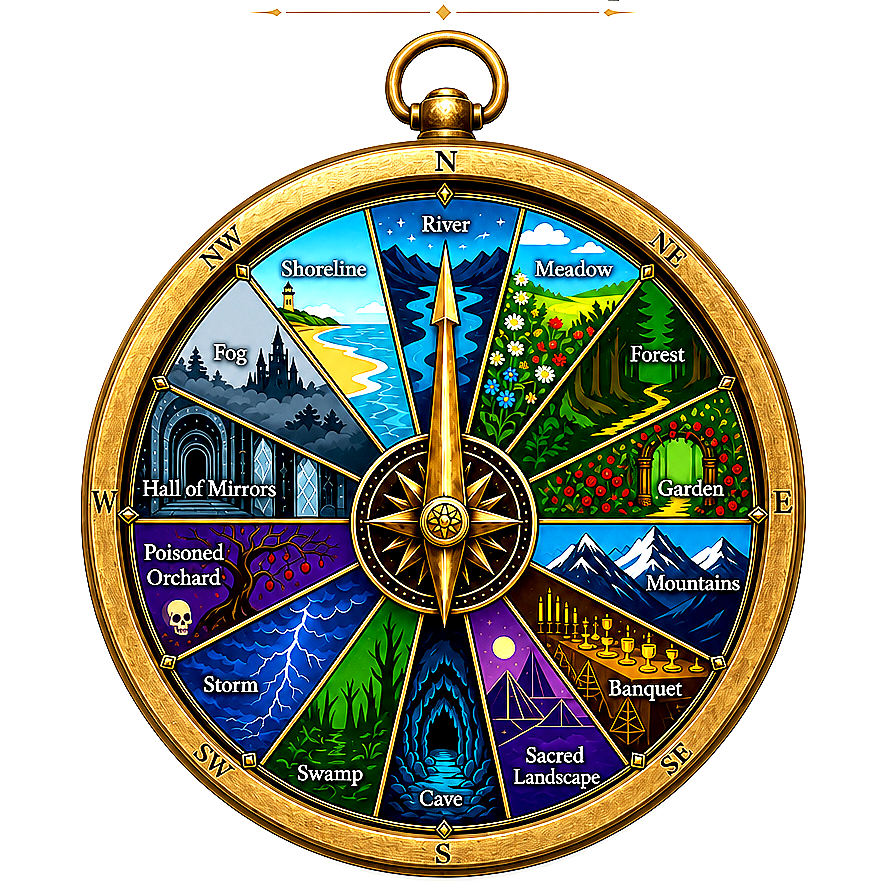
We all move through an inner geography - distinct emotional terrains that shape how we think, feel, relate, and make decisions.
Sometimes we feel grounded and clear.
Sometimes we feel overwhelmed.
Sometimes we're in transition.
Sometimes we become caught in environments that distort how we think and relate.
The Terrain Framework groups these experiences into four broad categories.
Wholesome
Difficult
Transitional
Artificial
When you know where you are, you can understand what’s happening, why it feels the way it does, and what kind of movement is possible next. You can also learn to understand the terrain of others. For example, two people can be living in the same house, working in the same office, or facing the same event while experiencing completely different terrains.
Why the Terrains Matter
Where you are shapes what is possible. Each terrain has its own:
emotional logic
relational patterns
decision‑making tendencies
forms of clarity
forms of distortion
pathways of movement
When you can locate yourself, you can:
understand what’s happening
stop fighting the terrain
work with its logic
move toward clarity
avoid unnecessary looping
make grounded decisions
How To Use the Terrains
Professionals and individuals can use the Terrain Framework to:
understand repeating patterns
make sense of emotional overwhelm
recognise internal distortions
navigate transitions
locate clarity
support decision‑making
deepen self‑understanding
improve relational dynamics
It’s a map - not a diagnosis. A way of seeing - not a label.
The Wholesome Terrains - Clarity & Coherence
These are the terrains where things make sense, where you feel grounded, connected, and able to act.
Examples:
Garden - a place where relationships are cultivated and life is able to grow
Forest - where identity deepens through exploration rather than certainty
Mountains - where perspective expands and meaning becomes clearer
Meadow - a landscape of steadiness, ease, and emotional regulation
Banquet - where connection, generosity, and belonging are abundant
Sacred Landscape - where meaning, coherence, and inner truth gather into a quiet, steady centre
What they feel like: Life begins to feel spacious again. Decisions become clearer. Relationships feel more authentic. Energy returns.
The Difficult Terrains - Challenge & Exposure
The difficult terrains are where emotional truth breaks open and becomes harder to manage. Although difficult, they are necessary for psychological growth.
Examples:
The Storm - where emotions intensify and clarity is disrupted by volatility
The Swamp - a heavy, draining place where movement feels slow and effortful
The Cave - where withdrawal feels protective but can become isolating
The Fog - the inner landscape loses its contours, direction blurs, decisions feel impossible, and familiar landmarks disappear
The Poisonous Orchard - a terrain that appears nourishing at first glance - familiar trees, or beautiful fruit - but the sustenance it offers drains rather than feeds
What they feel like: Life feels constricted. Decisions stall, patterns tighten, and the inner geography becomes harder to navigate.
Transitional Terrains - Movement & Change
The Transitional Terrains support recalibration, growth, and the shift from one state to another.
Examples:
River - where emotions move, soften, and begin to carry you forward
Shoreline - a threshold between states, where change becomes visible
The Fog - a terrain of confusion, disorientation, and cognitive cloudiness. The system cannot find orientation.
What they feel like: Movement returns. Perspective widens, options reappear, and the inner geography begins to reorganise.
The Artificial Terrains
The Artificial Terrains represent the external distortions that arise around us - they may be shaped by digital environments, intelligent systems, or procedural empathy.
What they feel like: Something is misaligned. The inner geography bends, meaning narrows, and familiarity is mistaken for truth. Comfort appears, but without nourishment; clarity surfaces, but without depth; resonance echoes, but without movement.
Information here about where to buy the book